By Jayne Pinskey, On-Site Dietitian for the San Jose Earthquakes
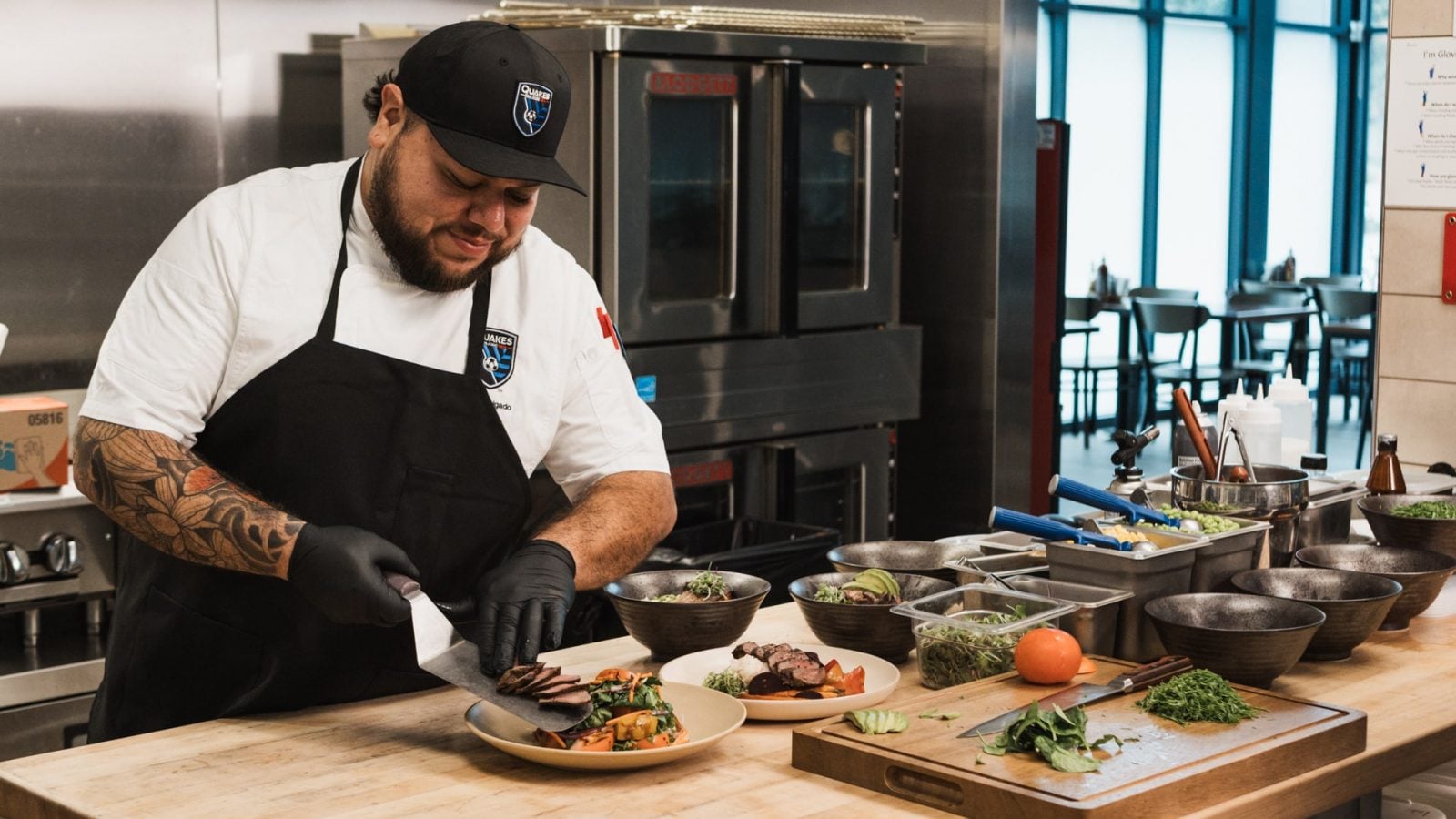
Not every training day looks the same, and neither should your plate. Fueling is dynamic. What you eat should match the energy you expend. At the San Jose Earthquakes café, we teach players how to adjust their meals based on training load. This strategy helps optimize performance and recovery while preventing under-fueling or overeating.
Why Adjusting Matters
Your body’s energy needs change with the intensity and duration of exercise. Heavy training days require more carbohydrates to restore glycogen and fuel explosive movements. Lighter recovery days call for lean protein and colorful produce to support muscle repair and reduce inflammation.
Matching intake to output improves:
- Energy availability
- Recovery speed
- Body composition goals
How We Do It
On high-intensity days:
- Increase carbohydrate portions like rice, quinoa, or whole-grain pasta
- Keep protein steady for muscle repair
- Add colorful vegetables for antioxidants and hydration
On light recovery days:
- Reduce carbs slightly
- Increase lean protein
- Focus on vegetables and healthy fats for anti-inflammatory benefits
Everyday Athlete Takeaways
You can apply the same principle at home:
- Hard workout? Add an extra serving of carbs like sweet potatoes or brown rice
- Rest day? Keep carbs moderate and load up on vegetables and protein
- Always include color for antioxidants and hydration
Bottom Line
Fueling is not one-size-fits-all. Adjust your plate to match your training intensity for better energy, faster recovery, and improved performance.
Want to learn more about our foodservice management for sports? Connect with us here.
Sources
1. International Society of Sports Nutrition Position Stand: Nutrient Timing
2. Academy of Nutrition and Dietetics: Nutrition and Athletic Performance
3. USADA Sports Nutrition Guide